




Communiqué
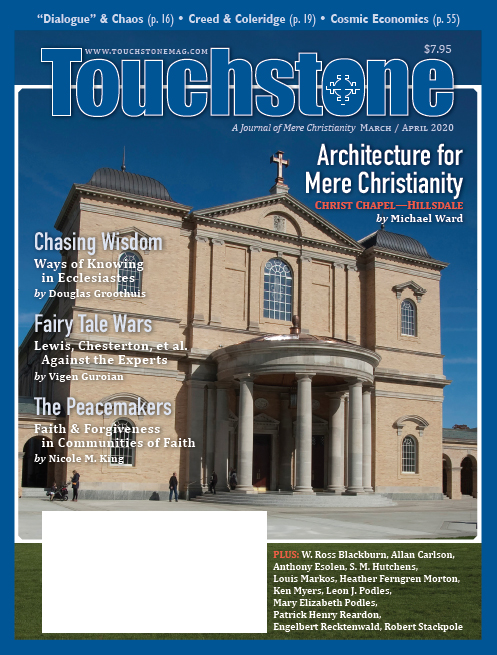
Christ Chapel at Hillsdale
An Architectural Sign of Mere Christianity
Hillsdale College, Michigan, was founded in 1844 by Freewill Baptists. Today, its denominational link with Baptists is no longer particularly evident, but unlike many institutions of higher learning that were Christian at their foundation and are now effectively secular, Hillsdale College is still robustly committed to the faith.
This commitment has recently been demonstrated by the construction of a new chapel at the heart of the college campus, named Christ Chapel and costing nearly $30 million. It is quite extraordinary, both as a piece of architecture and as a contemporary statement about the essential role of faith in the life of learning.
In the course of the fundraising effort for the chapel, the president of Hillsdale, Dr. Larry Arnn, remarked, "There has never been a great university that was not heavily concerned with the question of God. There has never been serious Christian practice that was not heavily concerned with learning. Christ Chapel will be a daily reminder of this central fact."
I had the honor of delivering a convocation address at Hillsdale on the day of the ground-breaking ceremony for the chapel back in April 2017, and then again at the first convocation in the completed building in October 2019. As someone familiar with the importance of institutional religion from my work as a college chaplain at both Oxford and Cambridge, and as someone interested in the ramifications of C. S. Lewis's concept of "mere Christianity," I have paid close attention to the progress of Christ Chapel.
It was designed by Duncan Stroik, professor of architecture at the University of Notre Dame, who is surely the most theologically literate architect working today. Stroik is best known for his Catholic churches and chapels, most notably at Thomas Aquinas College in California and at the National Shrine of Our Lady of Guadalupe in Wisconsin. These buildings are large, beautiful, classical, and unmistakably Catholic. At Hillsdale, he has operated on a similarly grand scale, but in a more interdenominational key.
Christ Chapel can seat nearly fourteen hundred people and is the largest classical chapel built in the United States in seventy years. It owes its architectural lineage to two Anglican buildings, namely Christ Church, Philadelphia, where the Founding Fathers worshiped during the Continental Congress, and St Martin-in-the-Fields, Trafalgar Square, London, built in 1721.
A "Mere Christian" Space
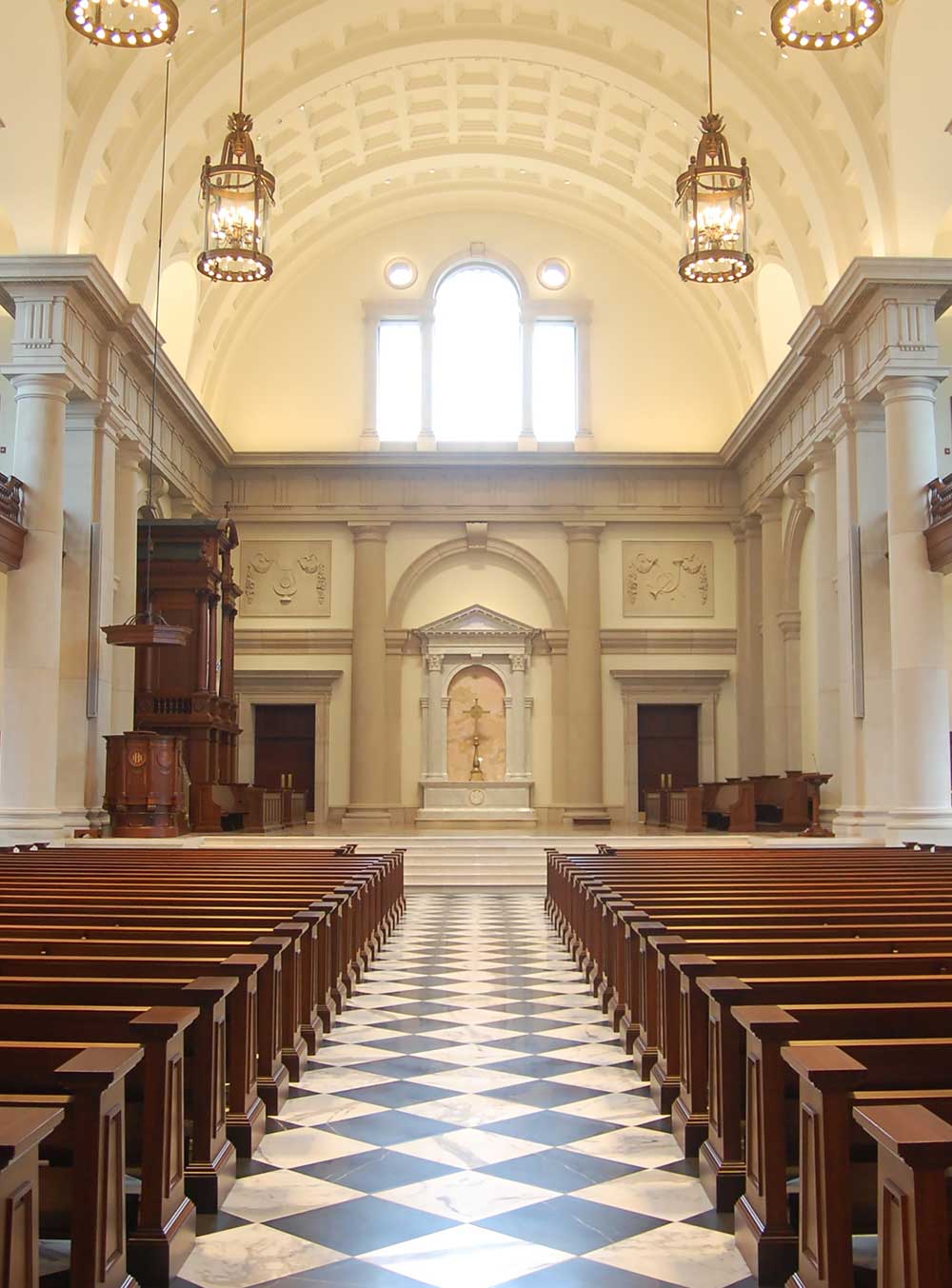
That Christ Chapel should have been designed by a Catholic but in a mostly Anglican or Protestant register indicates something of the ecumenical spirit that Hillsdale aims to foster. President Arnn sees the building as a "mere Christian" kind of space, a place where the different spiritual traditions present among the student body (and indeed among the faculty) can all feel welcome, where commonalities can be celebrated and Balkanization avoided.
As is customary in Protestant churches, the visual focus of the interior is a cross (this one bronze and free-standing). That it is not a crucifix might disappoint Catholics and Orthodox, but their religious sensibilities are accommodated in the fact that this cross stands atop a marble altar bearing on its forward face a circular relief of that Eucharistic symbol, the pelican plucking its breast.
There is no stained-glass in the main body of the building. However, those in search of color and icon-ography need only step into a small side chapel, where Christ's baptism and St. Michael defeating the devil are depicted in the windows.
Michael Ward is Senior Research Fellow, Blackfriars Hall, University of Oxford, and Professor of Apologetics at Houston Baptist University. He is the coeditor of The Cambridge Companion to C. S. Lewis (2010).
A Journal of Mere Christianity—Delivered to Your Door
- Essays on theology, culture, and the Church
- Contributors from across the Christian traditions

Six print issues (one year) of Touchstone, plus full online access and PDF downloads for only $39.95.

Get a one-year full-access subscription to the Touchstone online archives for only $19.95.
bulk subscriptions
Order Touchstone subscriptions in bulk and save $10 per sub! Each subscription includes 6 issues of Touchstone plus full online access to touchstonemag.com—including archives, videos, and pdf downloads of recent issues for only $29.95 each! Great for churches or study groups.
Transactions will be processed on a secure server.
more on art from the online archives
33.2—March/April 2020
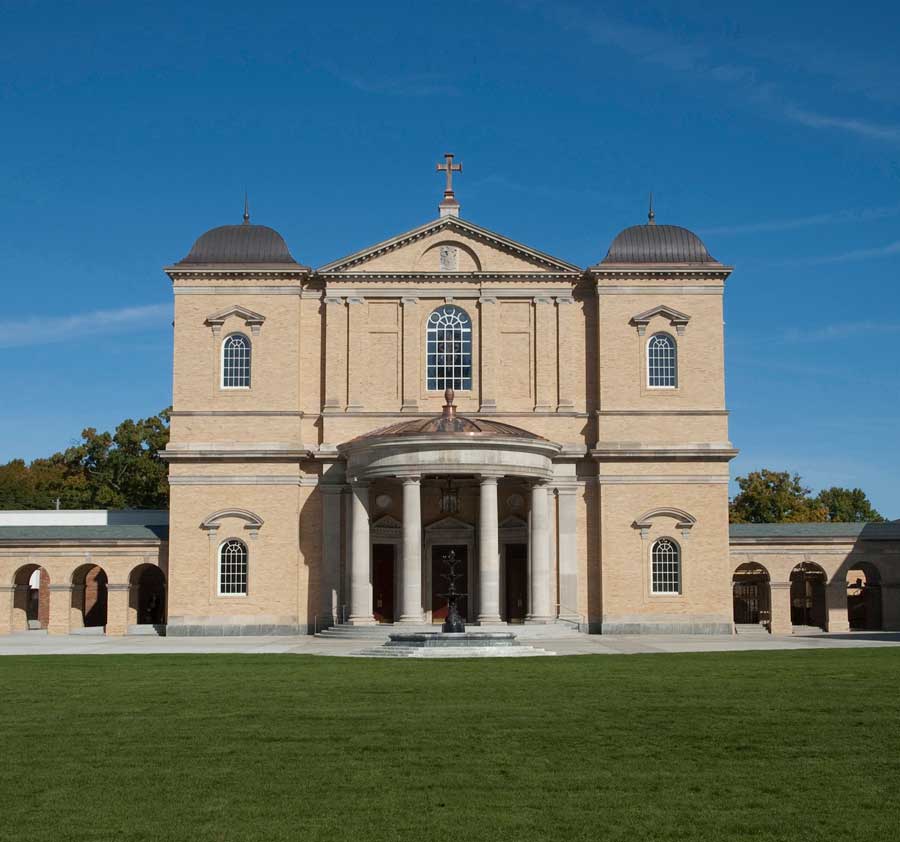
An Architectural Sign of Mere Christianity by Michael Ward
32.4—July/August 2019
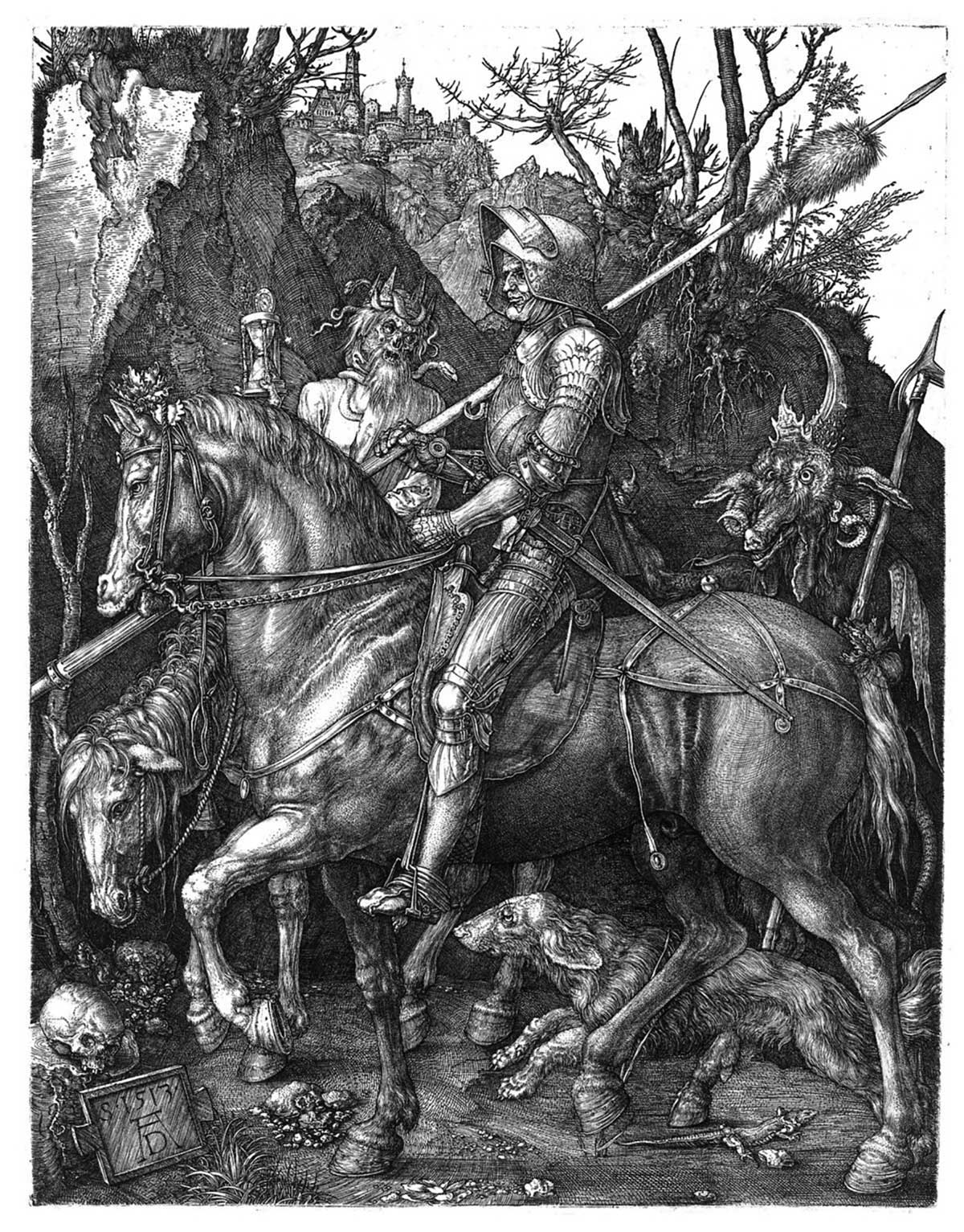
on Single-Mindedness in Durer's Ritter, Tod, und Teufel by Anthony Costello
more from the online archives


33.3—May/June 2020
on the Wisdom of the Good Doctor Edmund Pellegrino by Allen H. Roberts II
calling all readers
Please Donate
"There are magazines worth reading but few worth saving . . . Touchstone is just such a magazine."
—Alice von Hildebrand
"Here we do not concede one square millimeter of territory to falsehood, folly, contemporary sentimentality, or fashion. We speak the truth, and let God be our judge. . . . Touchstone is the one committedly Christian conservative journal."
—Anthony Esolen, Touchstone senior editor
