




Editorial
How It Happens
Easy Descent on an Unguarded Road
Recently we received a piece of writing in which biblical references to the author's subject were rejected as unhelpful, given the realities of the world in which we now live, whereas the author found real help in certain kinds of fiction. No attempt was made to explore what those unhelpful biblical references were teaching; much less was there any notion that what one finds in them is authoritative and that the task of the believing interpreter is to approach them humbly as the Word of God, following, if he can find it, the tradition of the Church, and discover what the Scriptures are saying on the assumption they are to be heeded and obeyed.
The phenomenon of treating what one finds in Scripture as something one may take or leave if one has good reason, an old habit and invariable sign of theological liberalism, seems to be on the rise among younger people who have been told they're "orthodox." They come from places with a name for theological conservatism. This points to a fundamental change from earlier days in the institutions where they are receiving their training. What is even more arresting is that those who think this way typically toss off their observations easily and naturally, as though they were accustomed to it, as if it were something they could do while thinking of themselves as orthodox with a perfectly clear conscience. Some passage from the Epistles, they will typically indicate, is Paul's opinion, but archaic and lacking in relevance—so something better must be found elsewhere.
The concept has never been impressed upon them that what St. Paul says is not a take-it-or-leave-it affair, that when he calls himself an "Apostle of Christ Jesus," it means that what he is writing is the Word of God (except where he explicitly identifies it otherwise) and that the whole Church since his day has certified his authority as unquestionable. Thus, his teaching, if sometimes difficult to understand, is not to be put aside by people who claim to be Christians but think they have a better idea.
The Road Out
I take this as evidence of where the reputedly (and formerly) orthodox places such people come from are at this point:
(1) Their teachers no longer find it necessary to argue away biblical teachings they find uncongenial. At one time they would have had to take the trouble to do this and risk their jobs.
As Screwtape mournfully observed, "the documents say what they say," and this eventually becomes painfully evident in those documents' resistance to innovative hermeneutics—the essence of Screwtape's complaint. There comes a time when learned and clever misrepresentation has run its course and the Source reasserts itself as historical consensus, unitary, definite, and to-be-believed-or-not, as something that calls for a division among its interpreters.
(2) The man-pleasing weakness, cowardliness, laziness, and irresolution of the heads of these establishments (primarily, of course, schools and churches) have opened the way for the dominance of the Age-Spirit in such a way that its signature rejection of traditional authority is no longer rebuked and expelled (which is hard and unpleasant work), but allowed to take its course and reconstitute the institution. The teachers find that when, for example, they begin to treat the words of an apostle as one opinion among others, or approach the Bible as a collection of historical documents with no underlying Christological unity (as the Church teaches and modernist historical criticism denies etsi Deus non daretur—as if there were no God), no one now stops them.
The first essays in this exercise in a conservative institution are typically tentative. In a former day they would have been detected and punished—but no longer, and the re-constitution of such a place in the form of Antichrist is typically quick:
Turning and turning in the widening gyre
The falcon cannot hear the falconer;
Things fall apart; the centre cannot hold;
Mere anarchy is loosed upon the world,
The blood-dimmed tide is loosed, and everywhere
The ceremony of innocence is drowned. . . .
(W. B. Yeats, "The Second Coming," 1919)
S. M. Hutchens is a senior editor and longtime writer for Touchstone.
A Journal of Mere Christianity—Delivered to Your Door
- Essays on theology, culture, and the Church
- Contributors from across the Christian traditions

Six print issues (one year) of Touchstone, plus full online access and PDF downloads for only $39.95.

Get a one-year full-access subscription to the Touchstone online archives for only $19.95.
bulk subscriptions
Order Touchstone subscriptions in bulk and save $10 per sub! Each subscription includes 6 issues of Touchstone plus full online access to touchstonemag.com—including archives, videos, and pdf downloads of recent issues for only $29.95 each! Great for churches or study groups.
Transactions will be processed on a secure server.
more on liberalism from the online archives
31.5—September/October 2018
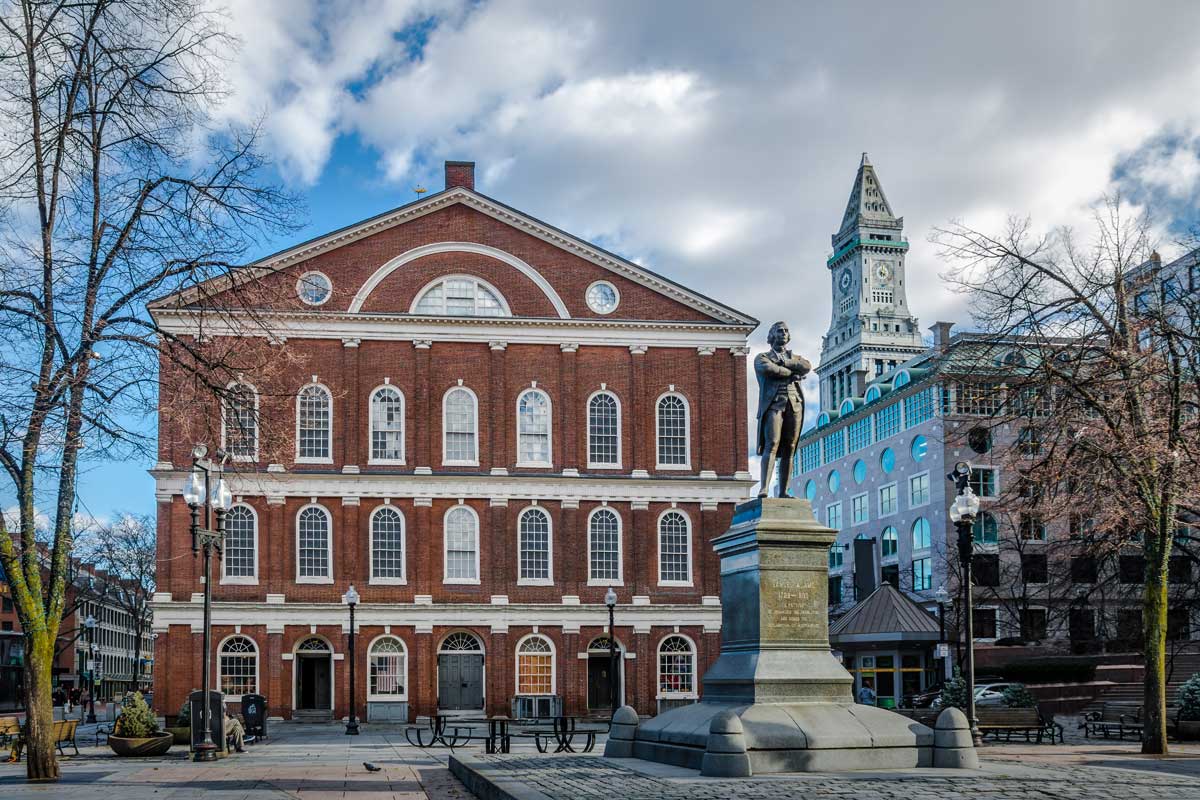
The Rise of the Gnostic Liberal State After Christianity by Andrew Latham

more from the online archives
29.1—Jan/Feb 2016
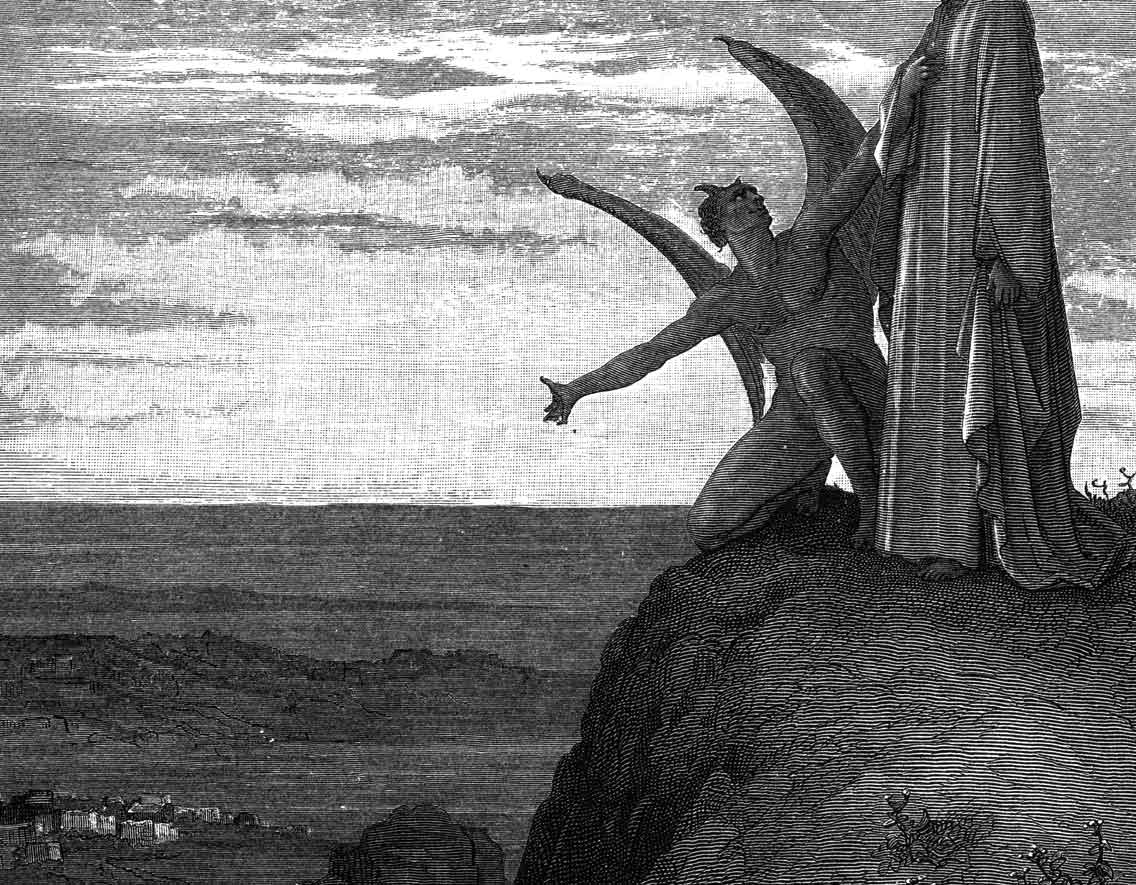
Secular Credibility Is a Devilish Temptation by James Hitchcock

14.1—January/February 2001
A Sociologist Looks at Fatherlessness & Its Causes by David Blankenhorn
33.2—March/April 2020
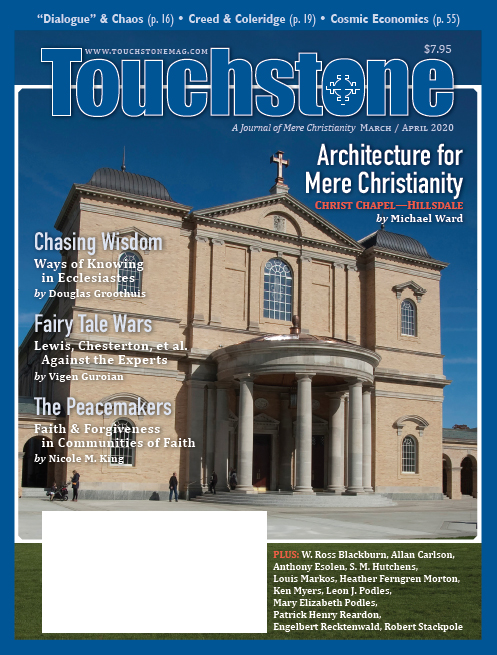
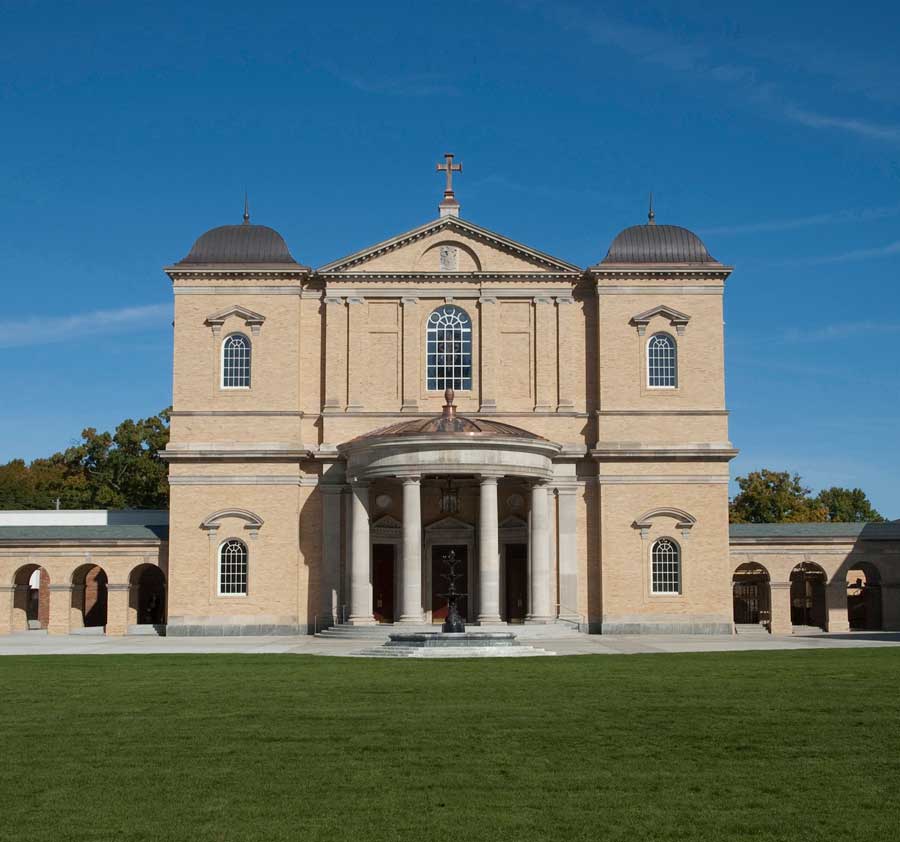
An Architectural Sign of Mere Christianity by Michael Ward
calling all readers
Please Donate
"There are magazines worth reading but few worth saving . . . Touchstone is just such a magazine."
—Alice von Hildebrand
"Here we do not concede one square millimeter of territory to falsehood, folly, contemporary sentimentality, or fashion. We speak the truth, and let God be our judge. . . . Touchstone is the one committedly Christian conservative journal."
—Anthony Esolen, Touchstone senior editor
