The Truth Who Lives by Patrick Henry Reardon

The Truth Who Lives

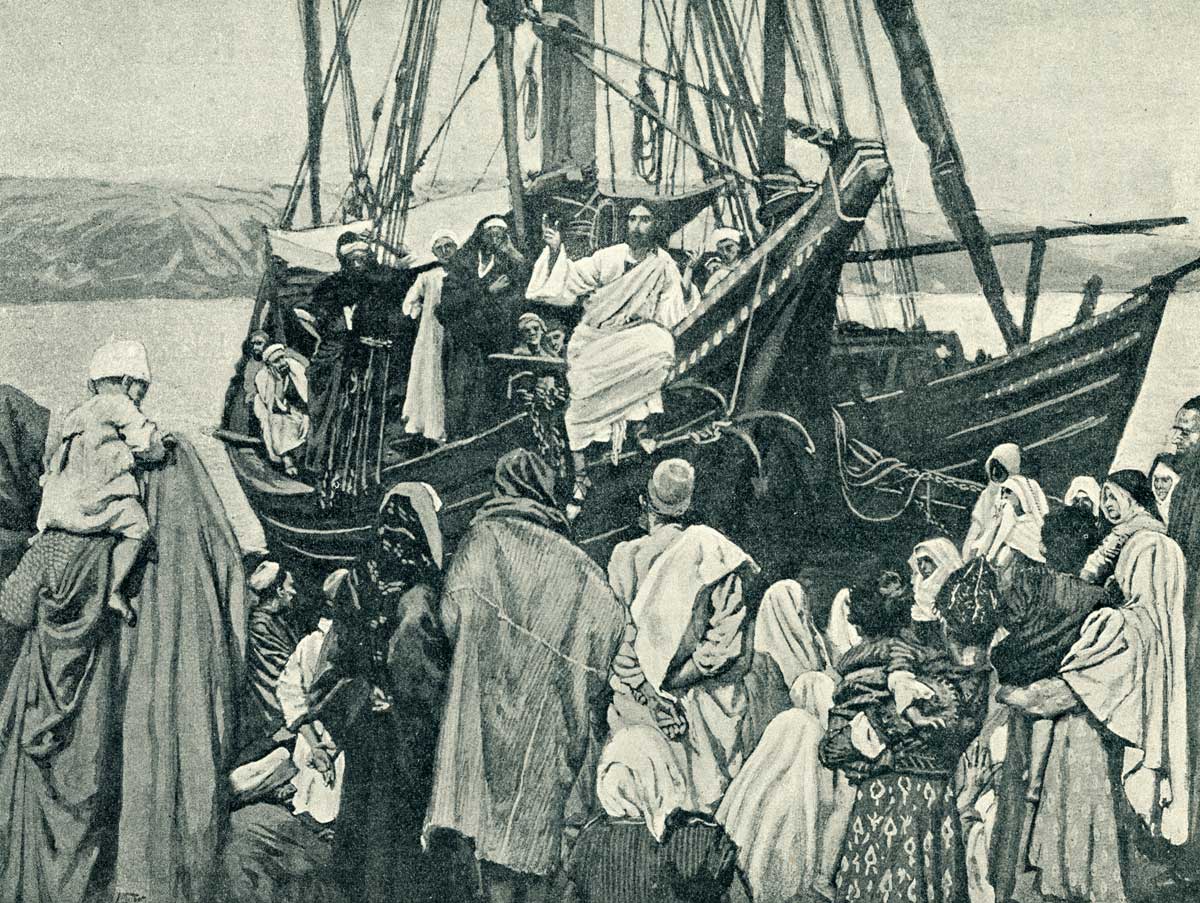
The teaching of Jesus was inseparable from his person. In the Gospel, we do not find our Lord appealing to universally available religious truths, truths that could stand on their own, truths accessible to man’s mind apart from his teaching of them, truths that could outlive the person who spoke them. It is

essential to grasp this fact, because it indicates an essential difference between Jesus and other “religious founders.”

To illustrate this difference we may take the example of Siddartha Gautama some six centuries earlier. When Gautama gathered his disciples to listen to his Deer Park Sermon, he certainly appealed to his own experience of a “revelation.” He referred to his enlightenment under the Bodhi tree and expounded to his followers the meaning of that experience. He defined Dependent Causation and explained how to be delivered from it.

Some historians of comparative religion are of the opinion that this is essentially what Jesus did. Although they recognize a difference in the objective content of the two efforts, they imagine that the Deer Park Sermon and the Sermon on the Mount have this in common: that both preachers were simply expounding their religious theories. According to this view, the difference between a Christian and a Buddhist would result solely from the decision about which religious teacher was believed to have “gotten it right.”

The problem here is that neither Gautama nor Jesus would agree with this assessment of the matter.

With respect to Gautama, it is important to observe that he never thought of himself as essential to his own message. Indeed, he made a point of saying that his religious experience was available to anyone who followed in his footsteps. He asked no one to take his teaching on faith. He never claimed to have discovered truths otherwise unavailable for discovery. He asked no one to believe in him as the exclusive channel of his teaching.

On the contrary, Gautama was persuaded that the Four Noble Truths would be just as true if he had never discovered them. What he had to say about the Chain of Causation would be just as valid, he believed, if he had never mentioned it. He claimed to teach truths independent of himself and transcendent to his teaching of them. In short, Gautama never claimed to be the way, the truth, and the life.

When we look at Jesus, we are faced with something radically different. All who heard him recognized that he taught as “One having authority.” Jesus expounded no truths transcendent to himself. What he taught was otherwise unknowable and inaccessible.

Indeed, how would we know that we have a heavenly Father who loves and cares for us, except on the testimony of Jesus? Is that an obvious or otherwise available truth? Again, if Jesus had not mentioned the fact, how would we know that the very hairs of our head are all numbered? Is it really self-evident, after all, that God has even the slightest regard for every sparrow that falls? Or that a loving Father clothes in beauty the flowers of the field? We know these things for one reason only—that Jesus told us so.

Thus, the religious message of Jesus is inseparable from the authority of his own person, his own “I.” This “I” is central to his message and permeates the whole of it. The essential feature to note about Jesus’ teaching is that it is founded on the proclamation, “But I say to you.” This “I” is the foundational component of the message, because our Lord’s doctrine stands or falls with himself. Jesus not only taught us that we have a Father in heaven, but he also claimed to be, in his own person, the sole access to that Father. He alone, he said, actually knew the Father.

This inseparability of Jesus and his teaching was, I submit, a major part of the crisis of Good Friday and Holy Saturday. While his dead body lay in the tomb, none of what he said could stand on its own. The authority that Jesus had claimed, to all human appearance, died with him. If death were the last word about Jesus’ life, the Sermon on the Mount would be nothing but religious theory or plain old make-believe.


Patrick Henry Reardon is pastor emeritus of All Saints Antiochian Orthodox Church in Chicago, Illinois, and the author of numerous books, including, most recently, Out of Step with God: Orthodox Christian Reflections on the Book of Numbers (Ancient Faith Publishing, 2019).

A Journal of Mere Christianity—Delivered to Your Door

  • Essays on theology, culture, and the Church
  • Contributors from across the Christian traditions
Subscribe (Print + Online)

Six print issues (one year) of Touchstone, plus full online access and PDF downloads for only $39.95.

Subscribe (Online Only)

Get a one-year full-access subscription to the Touchstone online archives for only $19.95.


bulk subscriptions

Order Touchstone subscriptions in bulk and save $10 per sub! Each subscription includes 6 issues of Touchstone plus full online access to touchstonemag.com—including archives, videos, and pdf downloads of recent issues for only $29.95 each! Great for churches or study groups.

Transactions will be processed on a secure server.


more from the online archives
32.4—July/August 2019

Sojourner Knight

on Single-Mindedness in Durer's Ritter, Tod, und Teufel by Anthony Costello

24.6—Nov/Dec 2011

Liberty, Conscience & Autonomy

How the Culture War of the Roaring Twenties Set the Stage for Today’s Catholic & Evangelical Alliance by Barry Hankins

32.1—January/February 2019

Schools of Impiety

The Diabolical Failure of Leaders in the Present Crises by James M. Kushiner

calling all readers

Please Donate

"There are magazines worth reading but few worth saving . . . Touchstone is just such a magazine."
—Alice von Hildebrand

"Here we do not concede one square millimeter of territory to falsehood, folly, contemporary sentimentality, or fashion. We speak the truth, and let God be our judge. . . . Touchstone is the one committedly Christian conservative journal."
—Anthony Esolen, Touchstone senior editor

Support Touchstone

00