




Union Laborer
That They May All Be One: The Call To Unity Today
by Walter Kasper
Burns & Oates, 2004
(202 pages, $25.95, paperback)
reviewed by Adam A. J. DeVille
There are, alas, not nearly enough theologians today of whom one could say that their publishing a new book is an event of some significance. (The philosopher Alasdair MacIntyre once acidly observed that “if I were God, I do not think that I would want to be studied by most contemporary theologians,” given that “the general intellectual level of theological argument is perhaps lower than at any time since the tenth century.”)
Happily, however, although Walter Kasper’s words command attention on the basis of his prominent position alone—he is head of the Catholic Church’s Pontifical Council for Promoting Christian Unity—in him we have a theologian of high caliber whose works have been widely read for years and can be reviewed on their own merits.
Kasper’s job is arguably the most difficult Roman appointment after that of the prefect of the Congregation for the Doctrine of the Faith. Nonetheless, in all the difficulties that attend his work, Kasper has deep wells of intellectual and theological resources to draw upon, as That They May All Be One makes clear. Though this book is in most respects an anthology of papers presented or published previously (often in relatively recondite places), all the papers have been extensively revised. Kasper, notwithstanding the demands of his job, has admirably kept au courant with recent scholarship.
A Book for Winter
The result is an important book concerned in the first half with the overarching theological issues of ecumenism and in the second with particular or “practical” problems, including those of pneumatology, justification, the Petrine ministry, and pluralism.
The articles range from more general, homily-like pieces (e.g., the chapter on “spiritual ecumenism”) to very focused works of theological scholarship (e.g., the chapter on the Lutheran-Catholic joint declaration on the doctrine of justification). What holds the book together, Kasper says, is a desire to see that the ecumenical movement, currently undergoing what has been frequently termed a “winter” or “hibernation,” be guided through this “atmosphere of mistrust, self-defence, and withdrawal” to work for the time when “visible unity” and “full communion” will be fully realized.
The goal, argues Kasper, quoting then-Cardinal Ratzinger, is that “the churches should certainly remain churches, but also progressively become one Church.” For that to happen, Kasper says, the ecumenical movement must get serious about the very foundational question of ecclesiology, which he thinks it has largely ignored.
He spends the first three chapters counteracting this, in chapter one reviewing the Catholic ecclesiological and ecumenical vision sketched out at the Second Vatican Council, all of whose decrees should be “read in an ecumenical perspective,” and in the second and third chapters surveying the contemporary scene in ecumenical theology and ecumenical dialogue.
Kasper comes to the heart of his book in chapter four, “ Communio: the Guiding Concept of Catholic Ecumenical Theology.” Here he reviews the major Catholic magisterial documents of the period after the Second Vatican Council (including the ecumenically nettlesome, and frequently wildly misunderstood Dominus Iesus of 2000), as well as the major dialogues in which the Catholic Church is involved (with special attention to the Orthodox-Catholic and Anglican-Catholic dialogues), to draw out the fact that “all the dialogues . . . centre around the concept of communio.”
Adam A. J. Deville is a Ph.D. student at the Metropolitan Andrey Sheptytsky Institute for Eastern Christian Studies at St. Paul University, Ottawa, Canada, where he is writing a thesis on Orthodoxy and the Roman papacy in response to the papal encyclical Ut Unum Sint.
A Journal of Mere Christianity—Delivered to Your Door
- Essays on theology, culture, and the Church
- Contributors from across the Christian traditions

Six print issues (one year) of Touchstone, plus full online access and PDF downloads for only $39.95.

Get a one-year full-access subscription to the Touchstone online archives for only $19.95.
bulk subscriptions
Order Touchstone subscriptions in bulk and save $10 per sub! Each subscription includes 6 issues of Touchstone plus full online access to touchstonemag.com—including archives, videos, and pdf downloads of recent issues for only $29.95 each! Great for churches or study groups.
Transactions will be processed on a secure server.
more from the online archives
28.3—May/June 2015
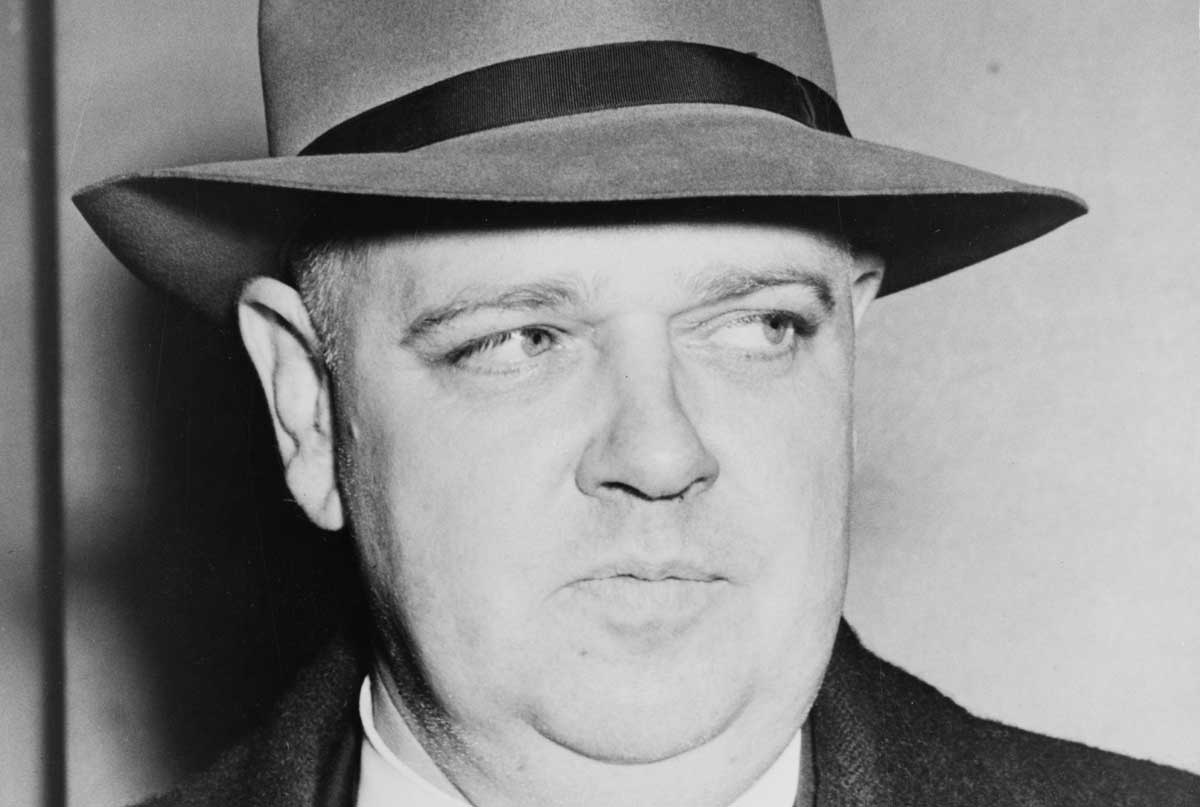
Whittaker Chambers's Lonely War Against Godless Collectivism by Hunter Baker
calling all readers
Please Donate
"There are magazines worth reading but few worth saving . . . Touchstone is just such a magazine."
—Alice von Hildebrand
"Here we do not concede one square millimeter of territory to falsehood, folly, contemporary sentimentality, or fashion. We speak the truth, and let God be our judge. . . . Touchstone is the one committedly Christian conservative journal."
—Anthony Esolen, Touchstone senior editor
