Nuclear Centers by Eric Miller
Nuclear Centers
Eric Miller on Finding Thick Community in the Receding
West
Twenty-two years ago, a boy I know well went off to college. It was the age
of argyle knee socks and skinny ties, of spikey mullets and tidy perms—a
time, in other words, when college students were trying to figure out how to
be hip without being hippies. Sting and Thriller filled the air,
Cosby and MTV the screen. And the genial pep of Ronald Reagan, contagious in
its way, was already making the poor guy the Democrats sent up into a sacrificial
lamb, though the election was still two months away.
All of this was the stuff of mystery to this boy. He had been overseas for
several years, and had just returned home that summer. John Travolta, flowers,
and transistor radios had given way to Boy George, plaid, and boom-boxes. It
was all unsettling, in an exciting sort of way, and he was eager to jump in.
And he was scared to jump in.
How does one safely enter something as powerful and vast as a culture? From
the protection of the family room? Behind the wheel of a car? Inside a mall
perhaps, wandering from shop to shop?
A True College
He had ventured into a small Christian college in a semi-suburban, still
largely rural part of southeastern Pennsylvania, living on something called
a “campus.” This was his primary entry point into that bewildering,
indeed, ominous-sounding world of America, 1984. The college was a safe place.
His father’s alma mater, it was a beloved place. It was probably just
the sort of place that he, at this delicate and critical moment of re-entry,
needed.
But unfortunately for him and for the other members of the community, it
was also a college that was struggling to map a course for itself in that strange
world, a world that was not just bewildering to freshmen, but to the grown-ups,
too, and for all kinds of reasons. To attain to the reality of college, after
all, is no simple task, whatever the era or age.
To truly be a college requires that the educational community in question
possess both social integrity—people living together as humans should—and
intellectual integrity—people thinking together as humans should. By
taking upon itself the holy responsibility of instructing humans in living
and thinking, a college community publicly obligates itself to enact those
ideals for which it stands in all aspects of its life: from the way it structures
its pay-scale to the way it structures its classrooms, from the attention it
gives to its students to the attention it gives to its food preparation.
If it fails at discerning the nature of the good life, or at integrating
this understanding into its own life, it will not possess integrity and will
look ridiculous—and, indeed, it will be deserving of ridicule. The social
and intellectual spheres must come together to form one philosophical, ethical,
aesthetic whole: This is what the ideal of college means, and teaches. If the
community in question actually comes to embody the most central and elemental
human ideals, college is achieved: The name fits.
The particular college community in which the boy found himself was filled
with earnest, smart people striving to attain, amid a confusing cultural circumstance,
this highly demanding ideal. But their confusion and disorientation were palpable,
even to freshmen. Confusion about what it meant to live as a Christian. Confusion
about what it meant to live as an American and a Christian. Confusion about
the ideas emanating from the broader academy. Confusion about the direction
in which the world was moving. And confusion about its own vocation within
the church and the world.
Both its social and its intellectual integrity, in short, were under threat.
It was struggling to overcome a profound if elusive sense of disorientation.
And it was not alone.
The Enormous Question
Because, as it turns out, this sort of pervasive and fundamental confusion
about who humans are and how we should live was, arguably, the defining quality
of the entire twentieth century, a quality whose era-shaping hold marks our
own day. Older understandings of humans, and history, and time, and God, have
in the past two hundred years been cast aside, with no small amounts of relief
and conceit.
But the century that those living a hundred years ago expected to deliver
us to the Promised Land, to the New Jerusalem, and beyond, turned out mainly
to leave we who survived it asking, fearfully, confusedly, this one enormous
question: What are we, after all, for?
In the aftermath of a century that featured political brutality of cataclysmic
proportions, that saw what was perhaps the most culturally, intellectually,
and economically sophisticated nation in the West seeking to destroy the Jewish
people, that saw a gaudy and transient form of wealth triumph only at outrageous
cost to the earth and its creatures, we find ourselves riveted to the most
basic of questions: Who are we? What is our purpose? Is there anything worth
fighting for? What is worth living for?
As had many collegians before him (one hopes), our disoriented
young student eventually discovered that one of his course texts, The
Norton Anthology of English Literature: Great Authors Edition, contained
many searching, learned meditations on the nature of civilization, and the
age, and the even more fundamental matter of human identity. One of these meditations
took the form of a poem that begins like this:
Turning and turning in the widening gyre
The falcon cannot hear the falconer;
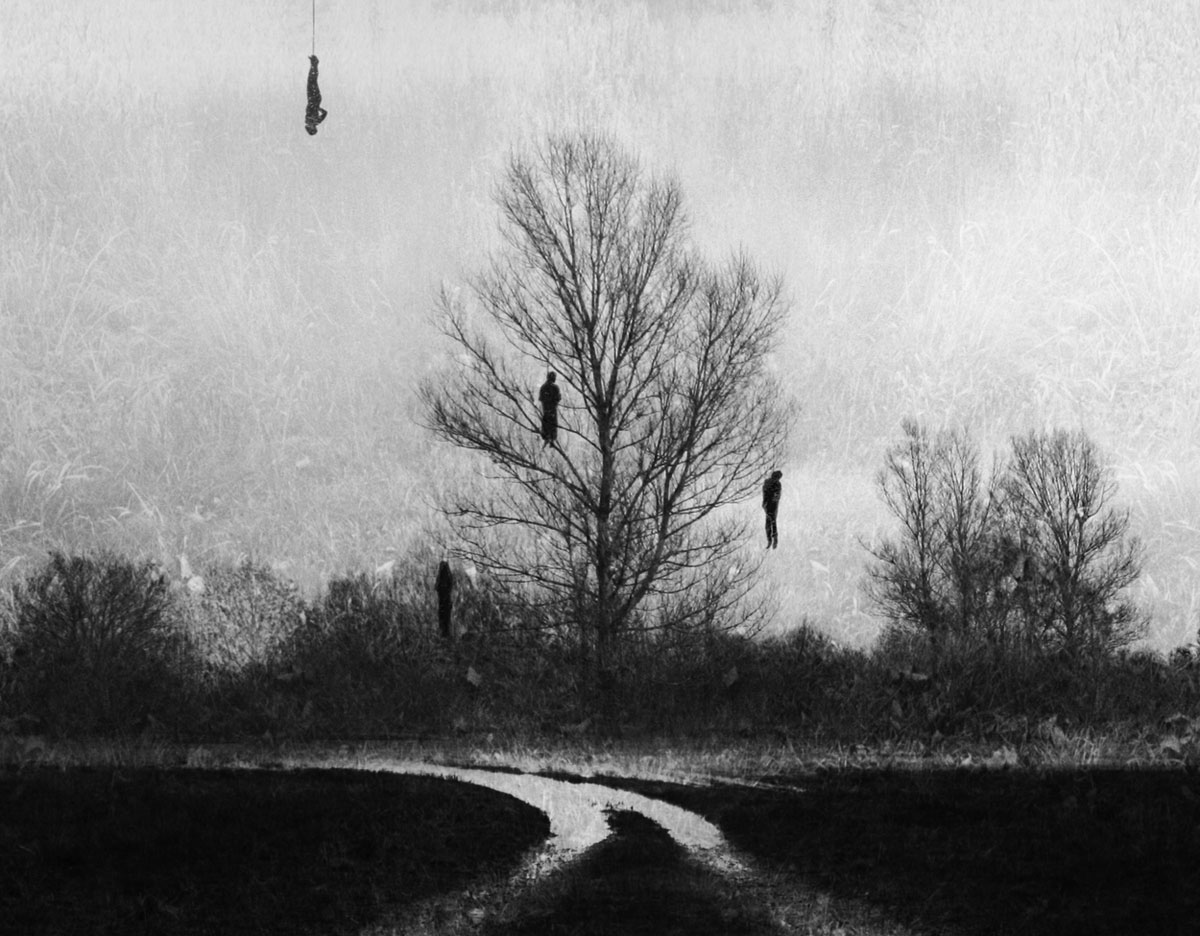
Things fall apart; the center cannot hold;
Mere anarchy is loosed upon the world,
The blood-dimmed tide is loosed, and everywhere
The ceremony of innocence is drowned;
The best lack all conviction, while the worst
Are full of passionate intensity.
This poem, William Butler Yeats’s “The Second Coming,” written
in the darkening years that followed World War I, stands among the most famed
of the thousands of attempts to capture in concentrated form the nature of
our times. And this one line— Things fall apart; the center cannot
hold—has become so embedded in our souls over these eighty years
because it reflects, I take it, both the reality of our deeply fallen creaturely
estate and our current civilizational circumstance.
For a brief glance backward reminds us, again, that we have not always regarded
our situation in such a dire fashion. In the eyes of our nineteenth-century
forebears, the center was not just holding but growing ever more strong, as
the deity of Progress, with dazzling pillars of fire and cloud, led the nations
forward. Things were falling together, not apart; triumphally, if not always
merrily, we went along.
Unfilled Vacuum
But little that has happened since World War I, whether the terrifying things,
like global depression, Hiroshima, and the cold war, or the dazzling things,
like television, smart bombs, and the World Wide Web, served to strengthen
the center to which Yeats referred; quite the opposite, in fact. Those traditions
that had helped to construct that center, including varying forms of Christian
belief and practice, continued to lose their shaping power, and the search
was on to fill the vacuum they left.
By the mid-twentieth century, the West was in the final stages of the long
and slow process of shifting, for whatever cohesion it still required, to another
center, to what we might call, simply, a self-center. This was not a polity
founded upon a broad (if unstable) consensus about a deity who creates and
commands, but instead a polity devoted most fundamentally to a self that deserves
and demands.
Put differently, we Americans, and others in the West, have chosen, or perhaps
defaulted, not to one transcendent center but rather to millions of human centers,
each self a law unto himself or herself. Once our old binding agent lost its
hold, we fell apart. And apart we remain.
We have tended, in a hopeful but fuzzy way, to call our new estate “freedom.” And
indeed, in the course of this long-coming fracturing we have, true to the odd
and eminently unpredictable way in which history moves, made political and
cultural gains that have led to an enlarged sphere of true freedom.
With our heightened perception of the self have come various movements and
laws that have won vital protections and liberties for those who had been systematically
marginalized and oppressed due to sex, race, or ethnicity. But paradoxically,
these gains have been made possible at least in part by this vast cultural
and social fragmentation, and the bonds that we the liberated have grasped
to tie our little self-centers together are not so impressive.
Usually when we, the liberated, wish to feel a sense of belonging to some
person or group, we end up looking for the code and symbols of those who are
part of our own self-selected, generation-driven market niche and follow along,
being sure to reserve the right to leave (whether job, church, town, or marriage)
at a moment’s notice, and so protect our “freedom.” Sadly,
this form of belonging is a faint shadow of the sort of thick membership that
words like “commonwealth” and “neighborhood” and “family” and “church” and “college” demand.
Our more shallow way of connecting cannot, and does not, hold. Inevitably,
we, disconnected and distant, find ourselves looking inside again to face once
more that lonely, looming question: What am I for? Just “good
times”? “Fun”? “Pleasure”? “Work”? “Success”? “Me”?
An Endless People
We’re not just disoriented, we’re barren. We don’t know
to whom or to what we belong, or should belong. In Aristotle’s useful
way of framing it, we know neither our formal end nor our final end.
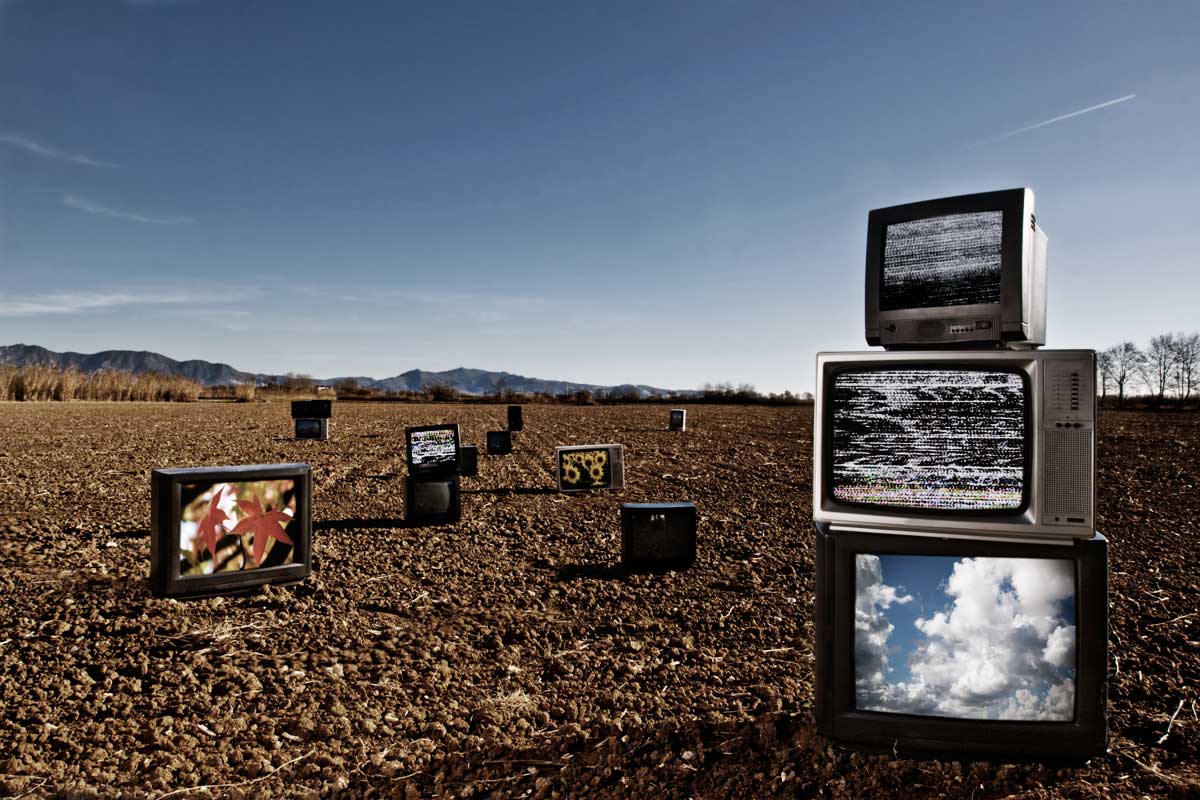
We awaken and find that we have jumped into a culture moving at breakneck
speed, powered by great economic forces dedicated to expanding and servicing
the appetites of the voraciously hungry selves we’ve become, and we eat
and eat and eat and we’re just as hungry as before, so we eat and eat
. . . and we’re still empty. Hungry. Alone. And we realize that we have
become, as we see in flashes of dark honesty, tiny centers, the tiniest centers
imaginable. And these tiny centers are not holding.
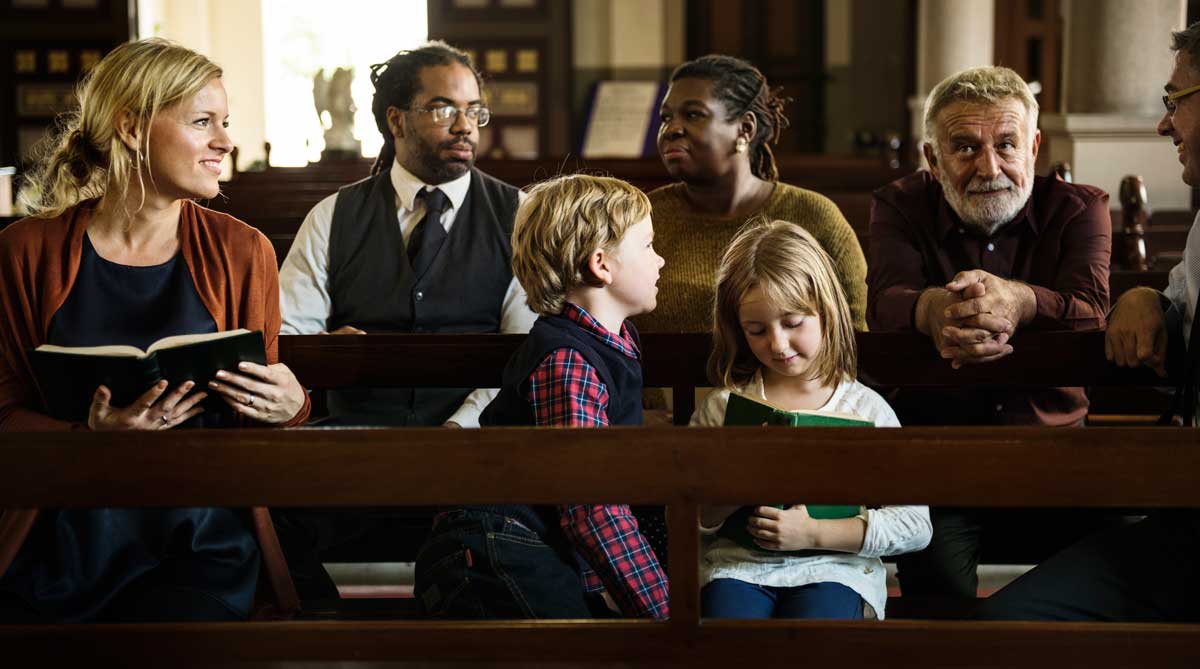
Like our bewildered collegian of two decades past, we need help. We need
safe places, beloved places, vital places, places whose integrity teaches us
who we are and how we should live in these strange times—and, perhaps
most crucially, how we can become a “we.” Surely it is this end
that communities and institutions of all sorts—colleges, churches, neighborhoods,
families—must come to guard, prize, and protect if our progeny are to
have a chance of knowing their own truest ends as children of God.
And what of the old “Christian” West? Maybe, in God’s providence,
it was time for it to recede. Like a college, a civilization that fails to
incarnate many of the chief ideals it has championed deserves, if not ridicule,
at least a stern rebuke and a sober exit.
Maybe instead of fighting so hard to preserve a dying civilization, people
of Christian faith should allow the most noble ideals and practices of our
Western heritage to call into existence a new people, one that more faithfully
adheres to that timeless vision of the good life the West at its best conserved,
a people that will begin this time with a markedly improved awareness of the
worth of each particular creature of God, and, indeed, of the inestimable worth
of the entire creation.
Perhaps this people’s intense and passionate conviction will call multitudes
back to their Maker, as ceremonies of innocence, and justice, and peace forge
new centers—centers that hold.
Eric Miller is an Associate Professor of History at Geneva College in Beaver Falls, Pennsylvania (www.geneva.edu). He is writing a biography of Christopher Lasch. |