





Editorial
God Rest Ye Merry
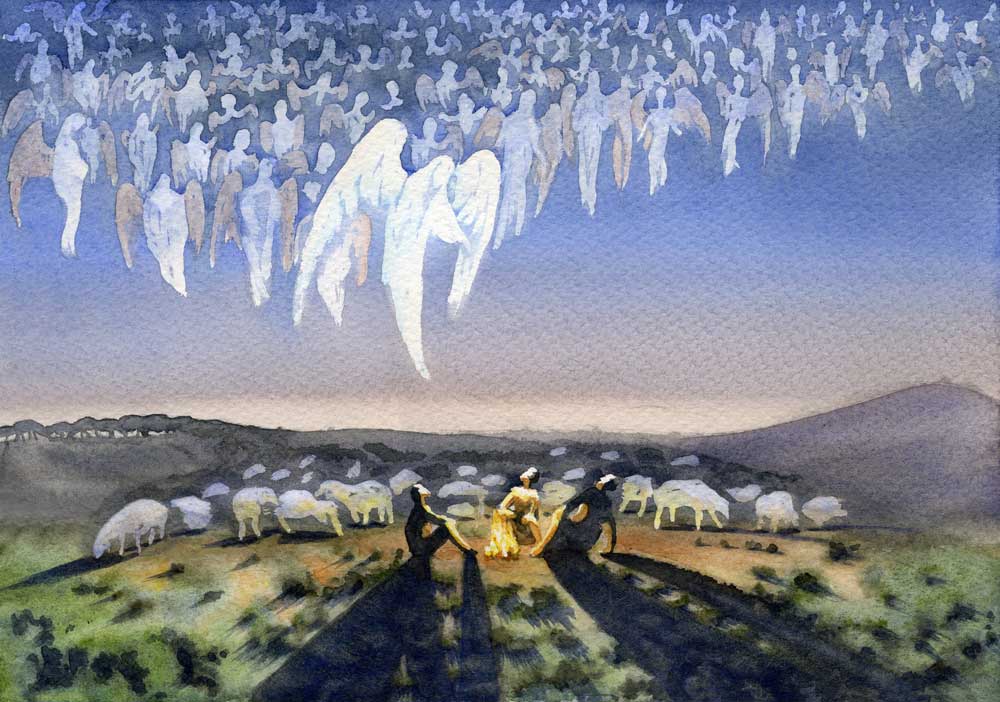
On Celebrating the Darker Meaning of Christmas by Wilfred M. McClay
A number of years ago, our friend Joseph Bottum, editor of First Things, made a nice observation about his experiences of successive Christmases, one that has stuck in my mind as equally true for me, and perhaps for many of us. He observed that every year there seems to be a particular Christmas carol that grabs his attention early in the season, often because one particular line or image in that carol suddenly opens itself, revealing a fresh meaning that he’d never before noticed.
I’ve had the same experience. I remember being struck a couple of years ago when, in listening to the French carol we call “O Holy Night,” a song I always tended to find both schmaltzy and tedious, I noticed the words “Long lay the world in sin and error pining,/ Till he appeared, and the soul felt its worth.”
Maybe it was just a quirk of timing, but those last six words hit me with unexpected force, and I wondered why I had never noticed them before, even though I’d long ago committed the lyrics to memory. It could have been partly because there are several extant “translations” into English, which vary in the way they render that phrase (and bear little resemblance to the French). But the more general point stands. And I now listen to “O Holy Night” with new respect.

I believe others have similar tales to tell, of carols that somehow come suddenly to life for them. The experience of hearing and singing and sharing these familiar carols every year, year after year, is like the best experience of liturgy, in its combination of familiarity and fresh moments of discovery, when universally known words that have for years passed through one’s lips in rote repetition suddenly blaze forth with meaning, vividly and achingly true.
Like the oldest and best liturgies, these songs are no one’s personal property, time and usage having wiped away nearly all distracting fingerprints of authorship and “originality.” Instead, they belong to all of us. They are old friends to us, and like the best old friends, they are comfortable and reassuring, and yet also full of mysteries and surprises and strange, hidden delights. Our Christmas carols are among the most precious shared possessions of our fragmenting, fraying culture, and for all that we abuse them and demean them, they seem to remain imperishable.
What people are saying about Touchstone:

This year, somehow it’s been “God Rest Ye Merry Gentlemen” that has stuck in my brain, and particularly these words, in the first verse: “To save us all from Satan’s power/ When we were gone astray.” We move through these sibilant words so quickly and rhythmically. I know I always have. And yet how plainly those few words sketch in a somber background, a whole universe of presuppositions without which the song has a very different, and diminished, meaning.
The merriness being urged upon the gentlemen (one should always remember that, in the lyrics, there is a comma between “merry” and “gentlemen”—they are not “merry gentlemen” being encouraged to “rest”) comes amid a great darkness, a darkness that never disappears, that beckons and threatens, a darkness whose presence is subtly conveyed by the minor key with which the song begins and ends. The black ship with black sails lingers on the far horizon, silent and waiting.
Dark Reminders
There are constant reminders of this darkness, if one has ears to hear them, running through the great liturgy of our Christmas carols, with their memorable evocations of bleak midwinter, snow on snow, sad and lonely plains, the curse, the half-spent night. The spooky and antiseptically sterile depiction of winter in C. S. Lewis’s The Lion, the Witch, and the Wardrobe and its cinematic adaptations is, in that sense, very close to the spirit of the older carols, and to the biblical account of the matter—much closer than the hearty merriment of rosy-cheeked seasonal songs like “Sleigh Ride” or “Let It Snow, Let It Snow, Let It Snow.”
Wilfred M. McClay holds the SunTrust Chair of Humanities at the University of Tennessee at Chattanooga, and is the author of The Masterless: Self and Society in Modern America (North Carolina) and A Student's Guide to U.S. History (ISI Books). He is a member of the Presbyterian Church, U.S.A.
A Journal of Mere Christianity—Delivered to Your Door with Full Online Access
- Essays on theology, culture, and the Church
- Contributors from across the Christian traditions
- Six print issues per year
- Full digital archive access
 Subscribe (Print + Online)
Get six issues (one year) of Touchstone PLUS full online access including pdf downloads for only $39.95.
 Subscribe (Online Only)
Get a one-year full-access subscription to the Touchstone online archives for only $19.95.
bulk subscriptions
Order Touchstone subscriptions in bulk and save $10 per sub! Each subscription includes 6 issues of Touchstone plus full online access to touchstonemag.com—including archives, videos, and pdf downloads of recent issues for only $29.95 each! Great for churches or study groups.
Transactions will be processed on a secure server.
more on Christmas from the online archives

21.10—December 2008
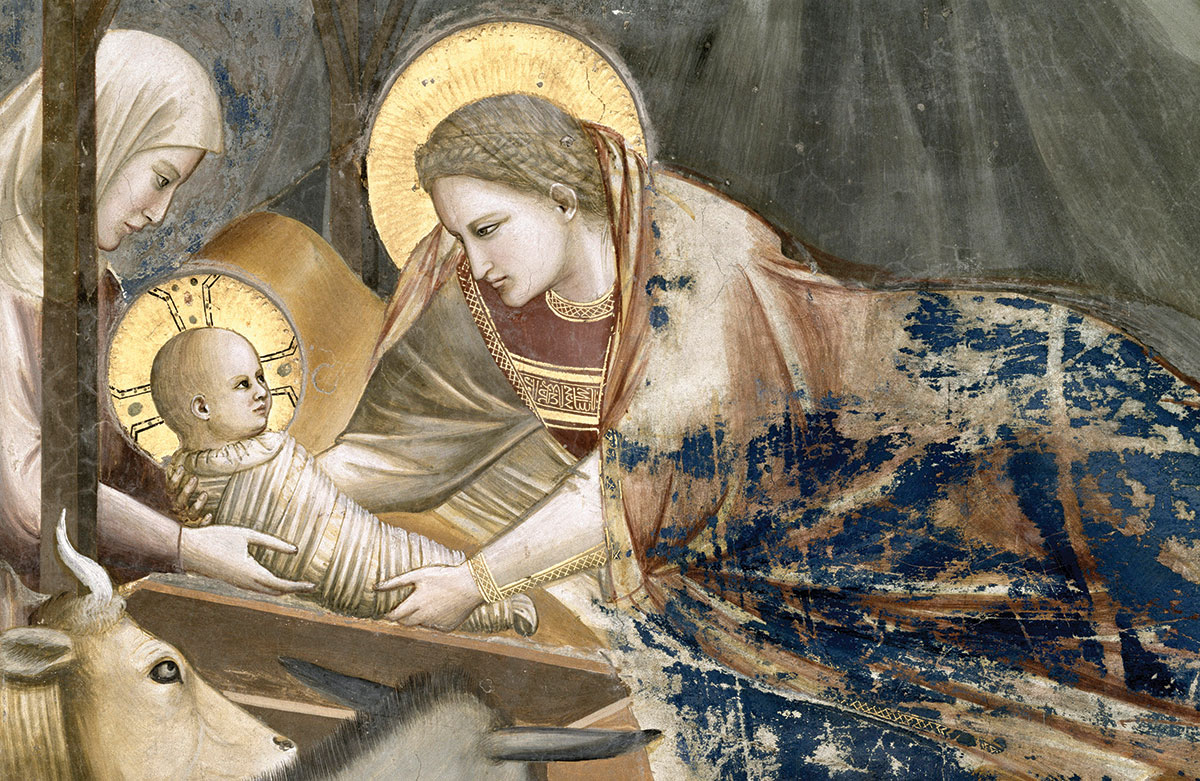
Early Christian Teaching on the Incarnation & Redemption by Patrick Henry Reardon

more from the online archives

29.4—July/August 2016
Russell Kirk: American Conservative by Bradley J. Birzer by Hunter Baker
20.7—September 2007
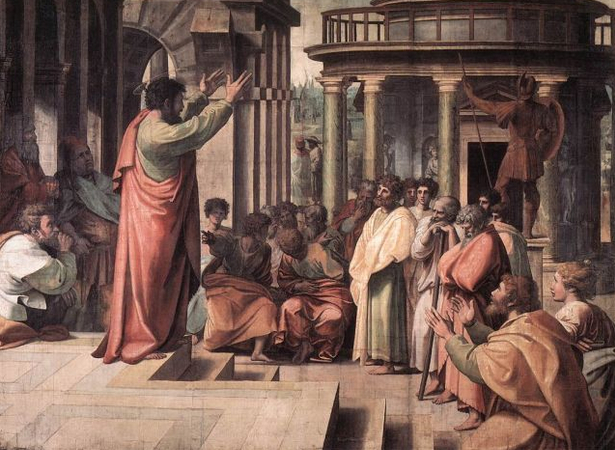
Paul Didn’t Build Bridges to Popular Culture by Russell D. Moore

31.1—January/February 2018
on Taking the Measure of the Deserving & the Undeserving Poor by Martin Bordelon
calling all readers
Please Donate
"There are magazines worth reading but few worth saving . . . Touchstone is just such a magazine."
—Alice von Hildebrand
"Here we do not concede one square millimeter of territory to falsehood, folly, contemporary sentimentality, or fashion. We speak the truth, and let God be our judge. . . . Touchstone is the one committedly Christian conservative journal."
—Anthony Esolen, Touchstone senior editor
