





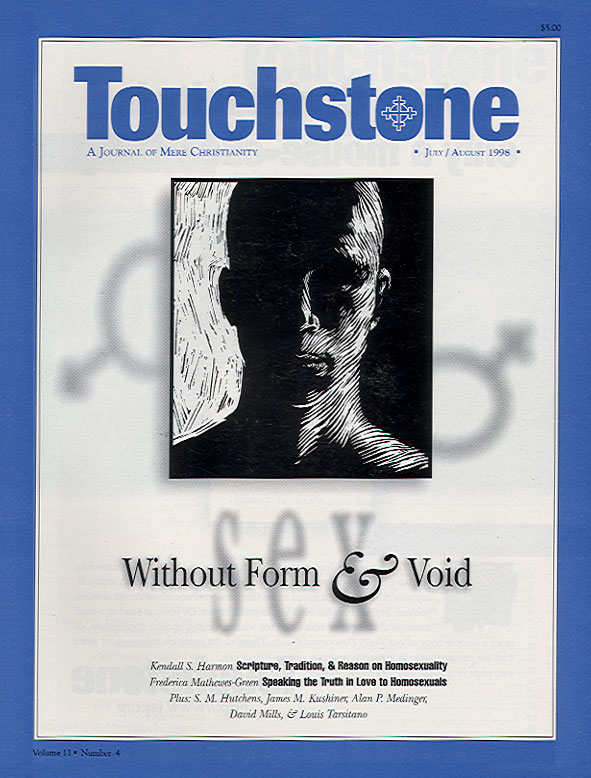
Lambeth & the Ways of Sex
Louis R. Tarsitano on Episcopal Apostasy
Once every ten years, at the invitation of the Archbishop of Canterbury, the bishops of the Anglican Communion meet in England for a Lambeth Conference. These conferences, named for the Archbishop’s palace in London, originated in 1867 when seventy-six bishops attended, as a spiritual consultation of the chief Anglican pastors from around the world.
Much has changed since then. The conferences have been moved to larger facilities in Canterbury to accommodate the bishops who attend. This summer, for Lambeth 1998, some 800 bishops were expected. Many of the bishops, especially from Africa and Asia where the vast majority of Anglicans now live, are genuinely holy men of God. Many others, however, are indistinguishable from business executives on a junket or the liberal academics who regularly attempt to remake the world at meetings of the Modern Language Association. The planning of golf outings and “talking shops” likely received as much attention as the planning for worship.
More perhaps, since the bishops can no longer worship with one another as a single body. Present were a handful of women who believe themselves to be bishops, on the strength of the notion that their political success in their own tiny national churches can overturn the Holy Scriptures and nineteen centuries of male apostolic ministry. A number of bishops who hold to the ancient Faith had earlier announced that they would not “suit up” in their regalia with these women and their supporters, or receive their “ministry,” or even pose for a group portrait with them, for fear that such actions would tell the lie that they are what they cannot be.
This fractured communion among the Anglican bishops is a profound spiritual problem, but the liberal establishment, deriving primarily from the British and American churches, will only countenance a political approach to dealing with it. One of the “preparatory documents” distributed to all the bishops tells the entire story, at least from the liberal viewpoint. Entitled “Called to Full Humanity,” it is divided into three sections: “Human Rights,” “The Environment,” and “Human Sexuality.” Its obvious intent was to “stack the deck,” so that those bishops who might have preferred to discuss the “call to full Christianity” could be accused of heartless opposition to the secular happiness and welfare of others.
It is part three, “Human Sexuality,” that concerns us here in particular. A few citations will give the flavor of it (numbers refer to the paragraphs in the document).
48. Of all the themes to be considered at the Lambeth Conference 1998, that of sexuality is one of the most sensitive. Bishops know that there are deep divisions within and between our different cultures on a number of issues[—]divorce, cohabitation, marriage, polygamy, and homosexuality. . . .
56. Three different ways of sexual living may be distinguished:
Way One: Faithful and righteous family life, based on love and mutuality, remains an abiding way for all Christians. . . .
Way Two: Some expressions of sexuality, which are sadly present in all societies, are inherently opposed to the Christian way and are sinful. By way of example, such unacceptable expressions of sexuality include promiscuity (both heterosexual and homosexual), adultery, prostitution, child pornography, active paedophilia, bestiality and sadomasochism. . . .
Way Three: Yet there are other forms of behaviour which some Christians claim should not be regarded as inherently sinful but which may be less than complete expressions of the Christian way. These would include some forms of African traditional marriage and faithful cohabitation.
Louis R. Tarsitano (d. 2005), a former associate editor of Touchstone, was a priest of the Anglican Church in America and rector of St. Andrew?s Church in Savannah, Georgia. He also was the co-author, with Peter Toon, of Neither Archaic Nor Obsolete: The Language of Common Prayer & Public Worship (Brynmill Press, Ltd., 2003).
A Journal of Mere Christianity—Delivered to Your Door
- Essays on theology, culture, and the Church
- Contributors from across the Christian traditions
Subscribe (Print + Online) 
Six print issues (one year) of Touchstone, plus full online access and PDF downloads for only $39.95.
Subscribe (Online Only) 
Get a one-year full-access subscription to the Touchstone online archives for only $19.95.
bulk subscriptions
Order Touchstone subscriptions in bulk and save $10 per sub! Each subscription includes 6 issues of Touchstone plus full online access to touchstonemag.com—including archives, videos, and pdf downloads of recent issues for only $29.95 each! Great for churches or study groups.
Transactions will be processed on a secure server.
more on sex from the online archives

25.4—July/August 2012
The Corrosive & Far-Reaching Fallout of the Sexual Revolution by Anthony Esolen
32.4—July/August 2019
Does Biblical Language for Man Matter? by Stephen F. Noll
28.3—May/June 2015
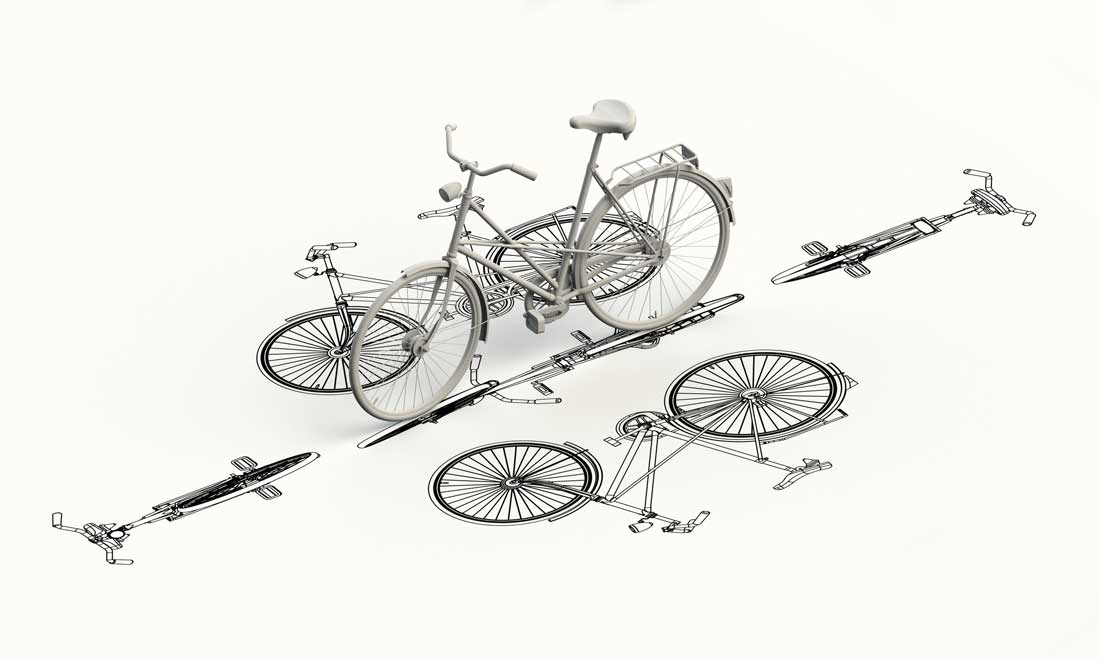
Of Bicycles, Sex, & Natural Law
Describing Human Ends & Our Limitations Is Neither Futile Nor Unloving by R. V. Young
more from the online archives

30.6—Nov/Dec 2017
Christ, Individualism & the Meaning of Cultural Diversity by Anthony Esolen
24.3—May/June 2011
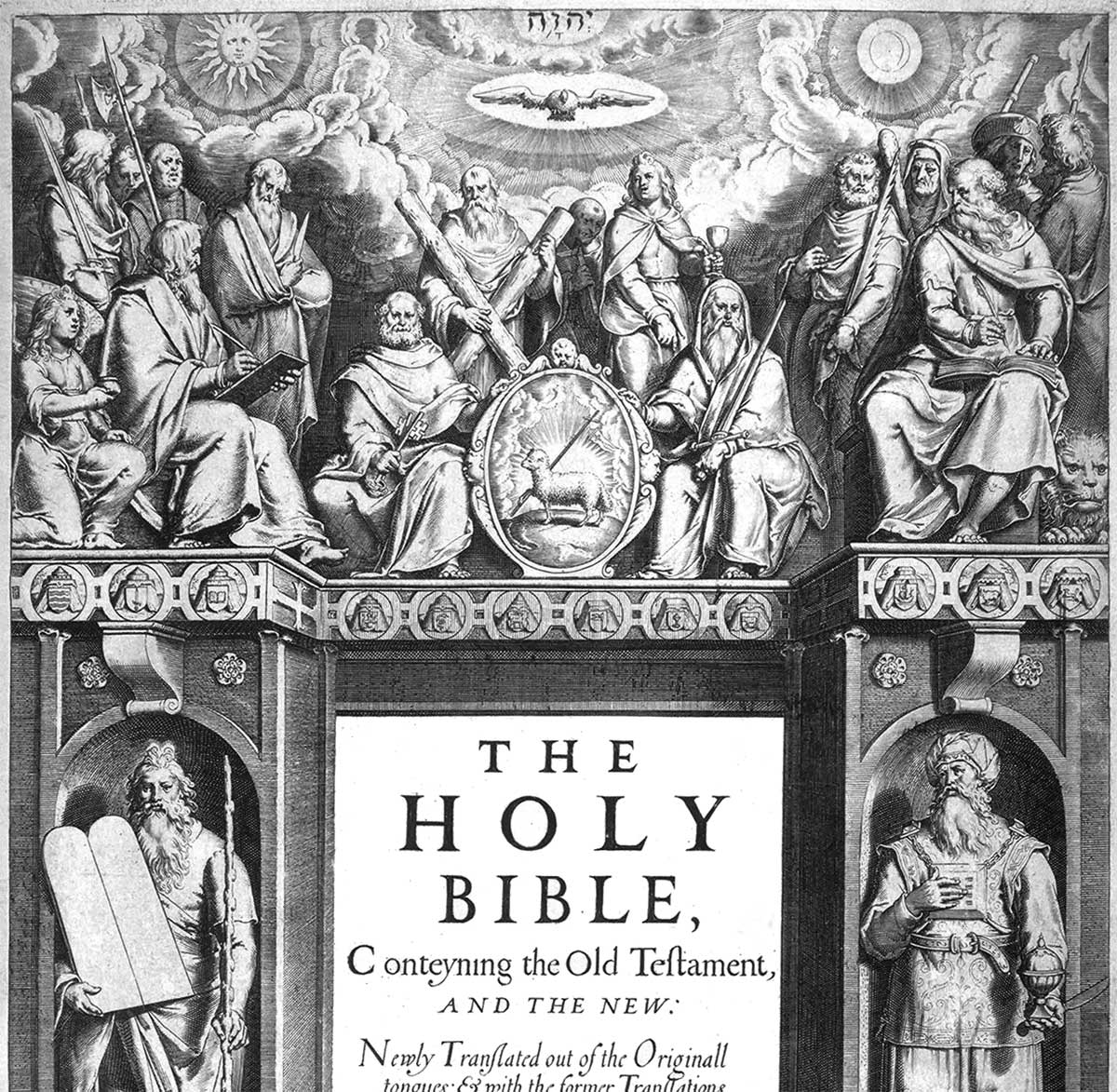
The Making & Endurance of the King James Bible, 1611-2011 by Barton Swaim
calling all readers
Please Donate
"There are magazines worth reading but few worth saving . . . Touchstone is just such a magazine."
—Alice von Hildebrand"Here we do not concede one square millimeter of territory to falsehood, folly, contemporary sentimentality, or fashion. We speak the truth, and let God be our judge. . . . Touchstone is the one committedly Christian conservative journal."
Support Touchstone
—Anthony Esolen, Touchstone senior editor
